Furniture Flipping Profit
Buy ugly, sell beautiful. What to hunt, what refinishing really costs, and the per-piece math — including the flips to walk away from.
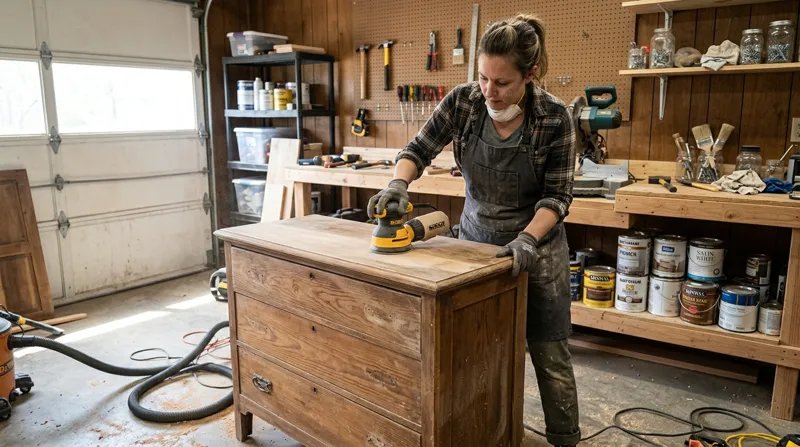
The anatomy of a $200 flip
| Amount | |
|---|---|
| Buy: solid-wood dresser (marketplace) | $40–$60 |
| Sandpaper, primer, paint share | $15–$25 |
| New knobs/handles | $10–$20 |
| Your time: 4–6 hours | priceless (track it!) |
| Sell price | $200–$280 |
| Profit before time | $120–$195 |
| Real hourly (5 hrs) | $24–$39/hr |
Buy rules (where profit is made)
- Solid wood only. Dovetail drawers, real wood backs. Particle board swells, chips, and photographs badly.
- Ugly, not broken. Bad paint and grime are profit; wobbles, missing veneer chunks, and broken joints are money pits.
- Right size, right price. Target $150–$350 resale: dressers, nightstand pairs, coffee tables. Tiny items aren't worth the hours; armoires need a truck.
- Pay ≤25% of resale. A $240 dresser means paying $60 max. This one rule prevents most beginner losses.
Sell rules (where profit is kept)
- Stage it. White wall, daylight, styled top (plant + books). Staged pieces sell 2–3× faster at 20%+ higher prices.
- Price firm-ish. List 10% above target to absorb hagglers; accept full price happily.
- Offer delivery for a fee. $40–$75 delivery closes buyers without trucks — pure margin if you have one.
- Track hours ruthlessly. A $150 profit over 10 hours is a $15/hr hobby. Speed comes with repetition — batch sanding and painting days.

Quick answers
Profit per piece?
$50–$200 typical for beginners; $500–$1,500/month part-time at steady volume.
What sells best?
Solid-wood dressers, nightstands, coffee tables at $150–$350 resale. No particle board.